The development and improvement of the public governance system are directly linked to the adoption of advanced international practices. In this context, cooperation with the Organisation for Economic Co-operation and Development (OECD) plays a significant role in enhancing strategic planning and governance approaches in Uzbekistan.
Between 2022 and 2024, the OECD conducted a study assessing the effectiveness of Uzbekistan’s public governance system across six key areas. Following the publication of the Public Governance Review (PGR), both parties agreed to continue their cooperation in support of ongoing reforms.
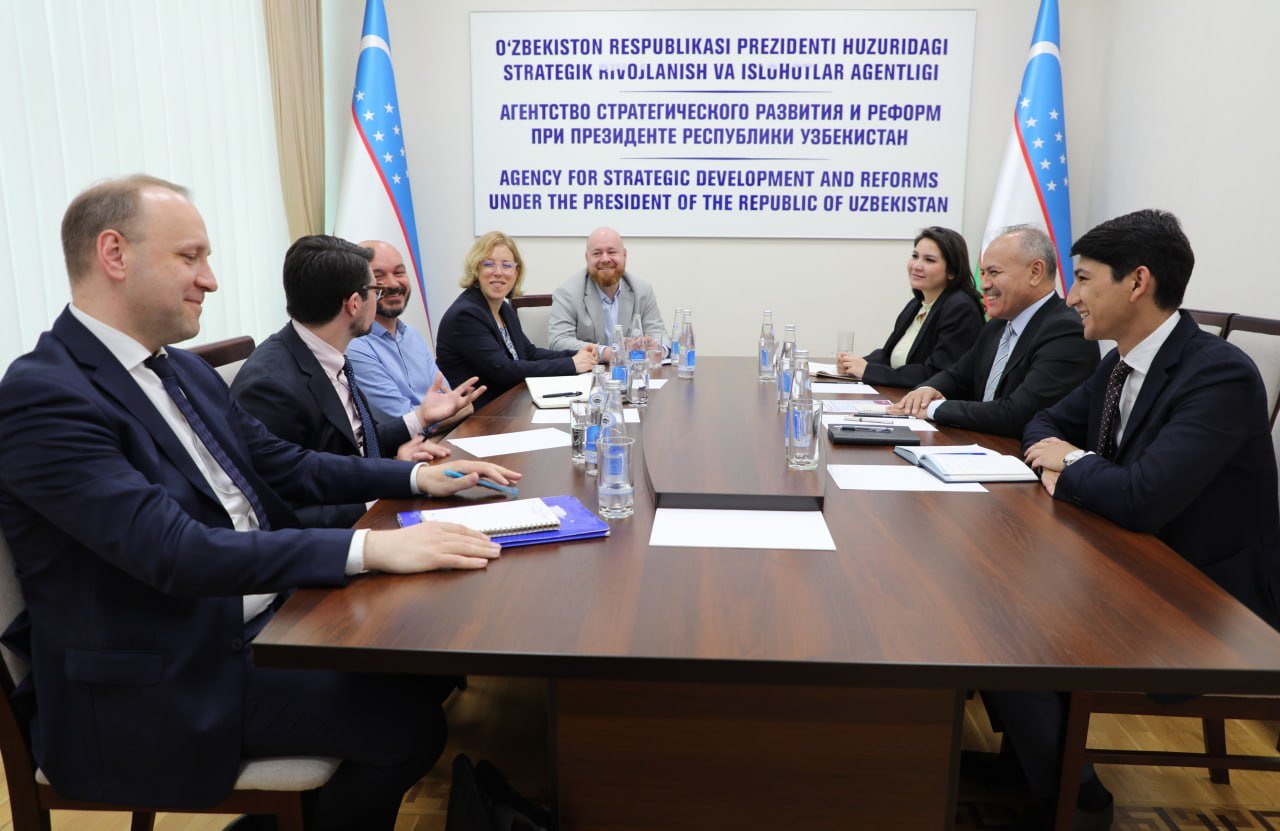
Today, a bilateral meeting was held between the leadership of the Agency for Strategic Development and Reforms and representatives of the OECD. In attendance were Simon Calleweart — OECD representative, Viktor Kessler — representative of the Deutsche Gesellschaft für Internationale Zusammenarbeit (GIZ), along with international experts and other participants.
During the meeting, First Deputy Director of the Agency A. Abdukodirov briefed participants on the reforms in public governance and economic modernisation being carried out under the leadership of President of the Republic of Uzbekistan Shavkat Mirziyoyev. It was noted that the recommendations of the Review are being implemented on a consistent basis and serve as a key methodological foundation for the further development of the governance system. Furthermore, extensive consultations informed by international experience were conducted during the finalisation of the “Uzbekistan — 2030” Strategy, resulting in the development of approaches for a public governance decentralisation strategy through to 2030.
OECD representatives spoke highly of the reforms under way and emphasised the importance of introducing the strategic planning and development system. The two sides exchanged views on the further reform of public governance, the deepening of decentralisation, and regional development.
As a result of the meeting, agreements were reached on the continuation of cooperation and the provision of expert and methodological support at all stages of project implementation. The dialogue conducted provides a foundation for more targeted engagement and is aimed at improving governance effectiveness and ensuring the sustainable socio-economic development of the country.