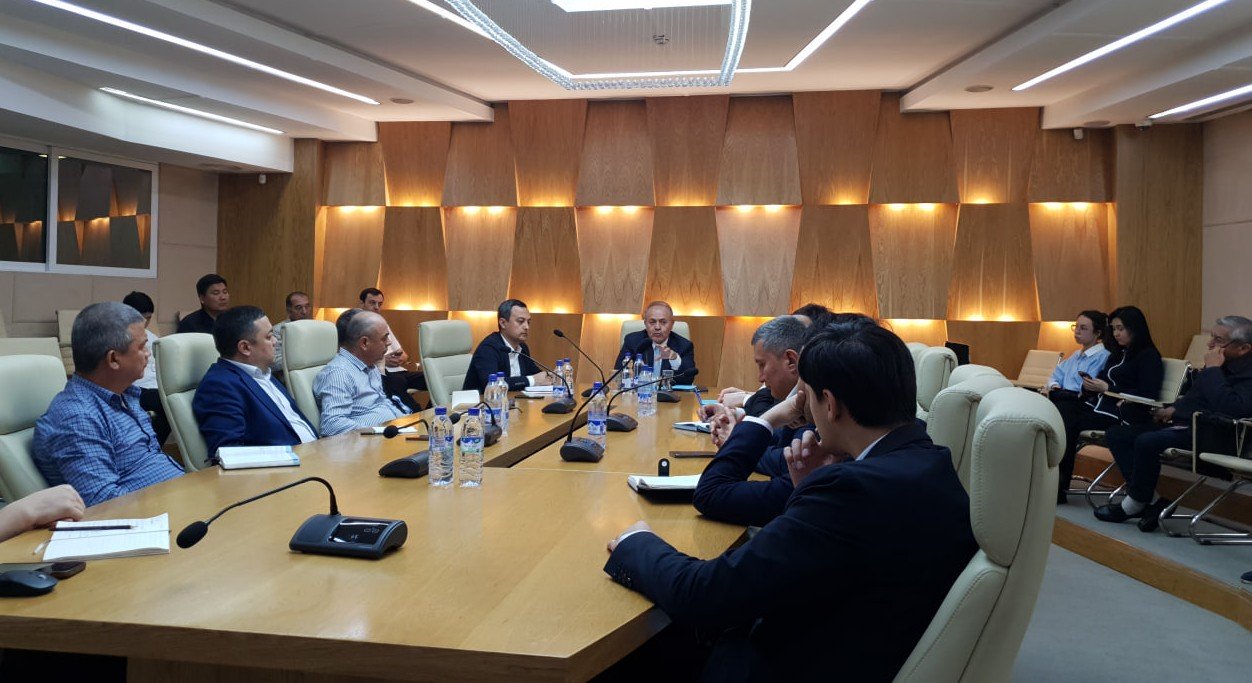
As previously reported, a series of economic briefings aimed at providing a comprehensive explanation of the “Uzbekistan – 2030” Strategy continues across ministries and government agencies. The latest session was held at the “Uzsanoatqurilishmateriallari” Association.
Representatives of the Agency for Strategic Development and Reforms also took part in the event. The “Uzbekistan – 2030” Strategy is designed to fully reflect the values and expectations of the population, while the principle of “justifying the trust of the people”, emphasised by the Head of State, implies that the activities of every public institution must be oriented towards serving the interests of citizens.
Particular attention was given to the distinctive features of the performance indicators embedded in the Strategy. Notably, all indicators are formulated in a manner that allows for clear measurement and evaluation, avoiding generalised slogans and vague wording. The indicators are set on an annual basis through to 2030, with their implementation to be monitored monthly and quarterly via a dedicated online platform being developed by the Agency.
In this context, special emphasis was placed on the importance of establishing a balance between the production and consumption of construction materials in order to identify the domestic potential of the Republic of Uzbekistan. In particular, it is proposed to classify the sector into three key categories:
— first, industries where strong domestic competition has already emerged and which are capable of operating sustainably without additional state support;
— second, areas demonstrating growth potential but requiring moderate state incentives, including regulatory, fiscal and monetary measures;
— third, segments where demand significantly exceeds the capacity of the domestic raw material base and which, at this stage, must be supplemented through imports.
Such a systematisation will enable the development of a targeted and economically sound industrial policy, avoiding excessive state intervention where market mechanisms function effectively, while concentrating support where it is genuinely required.


At the same time, one of the key strategic priorities identified is the maximum reliance on the domestic raw material base. The localisation of raw material supply is viewed not only as a means of reducing production costs, but also as a factor in strengthening the sector’s technological sovereignty and gradually reducing dependence on external suppliers.
A substantive exchange of views on the future development of the sector took place with the Association’s leadership and specialists. Following the event, it was once again emphasised that achieving the performance indicators set under the “Uzbekistan – 2030” Strategy is a priority task for all ministries and agencies, and that their implementation remains under continuous monitoring.