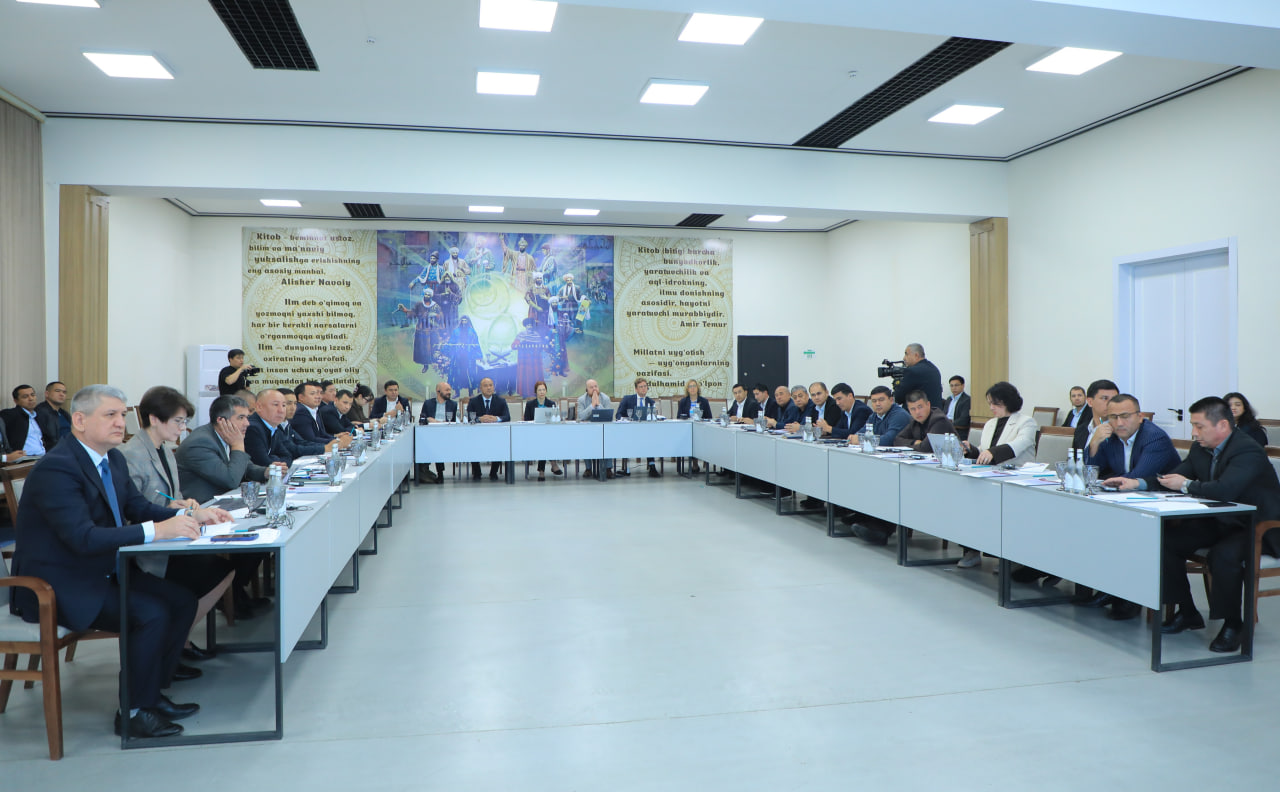
A seminar on strengthening strategic planning capacity was held in Fergana. It brought together representatives of the regional administrations (khokimiyats) of Fergana, Andijan and Namangan, deputy khokims of districts and cities, staff of information and analytical units, and officials of the Mahalla Association.
The event was organised by the Agency for Strategic Development and Reforms, the Institute of Legislation and Legal Policy, the Organisation for Economic Co-operation and Development (OECD) and the Deutsche Gesellschaft für Internationale Zusammenarbeit (GIZ) as part of the second phase of the OECD Public Governance Review project.


In accordance with Decree of the President of the Republic of Uzbekistan No. UP-21 of 16 February 2026, draft development strategies until 2030 have been prepared for the three regions. The priorities set out in them are: industrial and export development for Andijan region; high value-added industry, processing and export diversification for Fergana region; and poverty reduction and youth employment for Namangan region.
OECD analyst Simon Callewaert, GIZ representative Dr Viktor Kessler, Head of Division at the Agency Bakhtiyor Normirzaev and other speakers presented international practice in aligning the goals of the Uzbekistan – 2030 Strategy with regional plans, setting indicators that reflect the specific features of each territory, and monitoring strategy implementation. Methods for assessing regional economies, economic specialisation, infrastructure, demographic trends and human resource capacity were also discussed.
During practical sessions, participants worked in groups, using Fergana region as a case study, to examine the region’s contribution to national goals, the financial and human resources required, target indicators and results monitoring.
The second phase of the Public Governance Review covers strategic planning and policy coordination, decentralisation, data-driven policymaking and results-based management.